

Foreword
The foreword is written by Rep. Gus Bilirakis and Rep. Jennifer Wexton, two leaders who know Parkinson’s personally.
Their words open the book with both urgency and hope—showing why Parkinson’s demands a national plan, how bipartisan action is underway, and why uncovering environmental causes is essential to preventing these diseases for future generations.
Foreword
The foreword is written by Rep. Gus Bilirakis and Rep. Jennifer Wexton, two leaders who know Parkinson’s personally.
Their words open the book with both urgency and hope—showing why Parkinson’s demands a national plan, how bipartisan action is underway, and why uncovering environmental causes is essential to preventing these diseases for future generations.
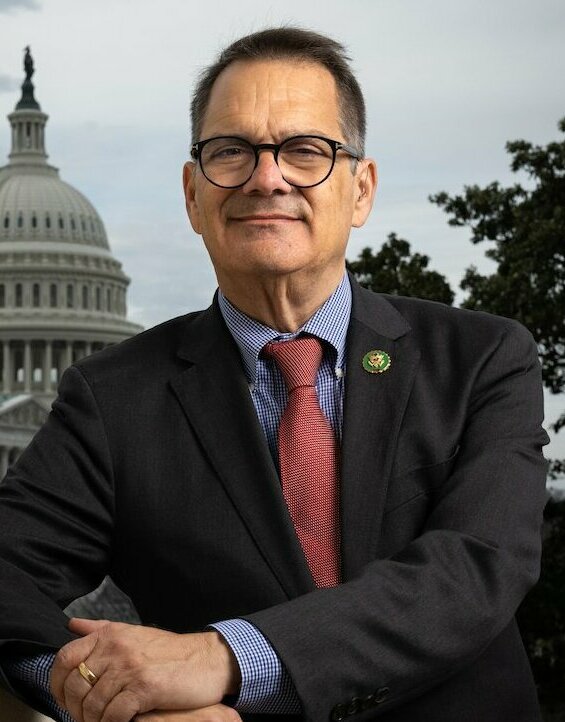
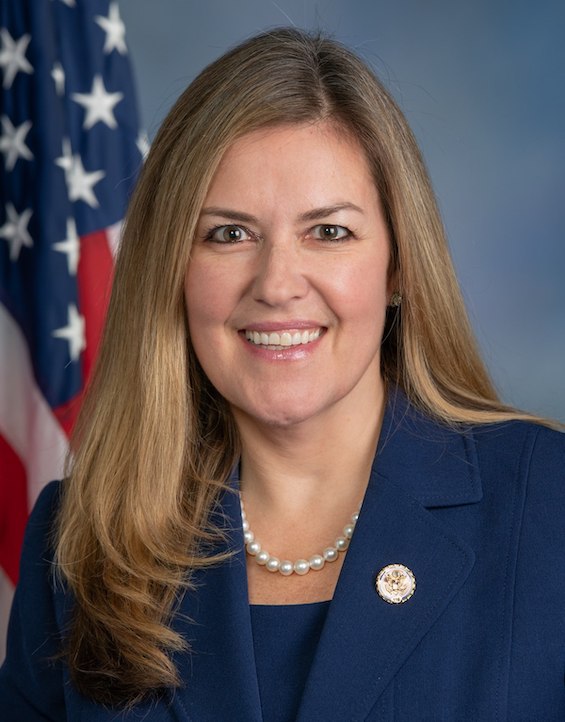
For us, Parkinson’s is personal.
For Gus, Parkinson’s has affected multiple generations. My parents’ families emigrated from Greece in the early 20th century. Both families settled in Tarpon Springs, Florida, known as the “Sponge Capital of the World.” When my dad was an infant, his family moved to western Pennsylvania, where my dad’s dad worked at local steel mills for 40 years.
At an early age, my dad sold newspapers and, every night until 1:00 a.m., worked as an usher at the local movie theater. Upon graduating from high school and prior to serving his country, my dad worked at local steel mills. My dad then served in the Air Force during the Korean War. Following his service, he attended the University of Pittsburgh and received a degree in chemical engineering while working 48 hours a week at Westinghouse. He subsequently moved back to Florida and graduated with a J.D. from the University of Florida. He ultimately moved back to Tarpon Springs near a Superfund site, practiced law, and served in the United States Congress for 24 years. My dad lived the American Dream until Parkinson’s robbed him of his retirement.
Similarly, my brother went to the University of Florida and became a successful family practice doctor serving those in need in our community. He was diagnosed with Parkinson’s in his 40s and died at age 61. Parkinson’s robbed him of his life.
For Jennifer, the disease was a shock and a surprise. I explained away my earliest symptoms as everything but Parkinson’s – like the stress of this new job in Congress, walking tens of thousands of steps around the Capitol, or just simply getting older. I couldn’t believe someone like me could get a disease like this. But in 2022, when my clenching toes and shuffling gait progressed and a tremor in my voice emerged, I sought medical advice and was diagnosed at age 54 with Parkinson’s disease. On World Parkinson’s Day in 2023, I shared that diagnosis publicly.
Unfortunately, my symptoms progressed much faster than expected. My doctors re-visited their diagnosis and changed it to a different parkinsonian disorder – progressive supranuclear palsy (PSP) – a kind of Parkinson’s on steroids. PSP has robbed me of my speech. But it has not taken away my voice, a voice that I am determined to use to help end these terrible diseases.
Both of us realized that our efforts to address these awful conditions required a plan. And surprisingly, the federal government did not have one. Every six minutes, an American is diagnosed with Parkinson’s, yet we had no plan. Every day, 100 Americans die from the disease, but we had no plan. Every year, the country spends $50 billion on Parkinson’s and still no plan.
So with our wonderful colleague, Congressman Paul Tonko from New York, and great supporters in the Senate and beyond, we drafted the National Plan to End Parkinson’s Act. The bill directs the Secretary of Health and Human Services to work with experts from the public and private sector to develop a national plan to prevent and to cure Parkinson’s disease. On December 14, 2023, the U.S. House of Representatives passed the bipartisan bill 407 to 9. Six months later, the Senate passed it unanimously. With our families and us at his side, President Joe Biden signed the bill into law.
Like this book, the plan calls for us to prevent the disease, amplify the voice of patients and caregivers, and navigate the frontier of new treatments. However, one element was still missing, and that was to learn why people are developing these diseases in record numbers. Unlike many other diseases like seizures and strokes, which date to biblical times, these diseases are relatively new. The first major description of Parkinson’s disease did not happen until 1817. ALS, which causes paralysis, was first observed in 1869. PSP was not described until 1964, just sixty years ago. Dementia with Lewy bodies, another parkinsonian disorder that affected the late actor Robin Williams, was not noticed until 1976. All these diseases are increasingly common. Why?
To answer that question, we have drafted the Healthy Brains Act. The bill instructs the Director of the National Institutes of Health to establish research, training, and education programs to identify the underlying environmental causes of neurodegenerative diseases. We have spent a generation studying the genetics of many different diseases, which has advanced our understanding of these conditions. Investigating the environmental causes is long overdue.
The heritability of many of these diseases is modest or low. Most people, like Jennifer, do not have a family history of the disease. They do not carry a genetic risk factor. The prevalence of these diseases vary by geography, and clusters abound. Many are tied to chemicals in our food, water, and air. And many, including our families, have lived near polluted sites.
We need to learn why for three reasons. First, the initial step to curing any disease is to determine its cause. This approach has helped us cure hepatitis C and stomach ulcers. Second, once we know its cause, we can slow its progression or at least prevent it from getting worse. This has worked with COVID-19 where early treatment decreases the risk of hospitalization and with many cancers where early detection can save lives. Third, and perhaps most powerfully, when we learn why, we can prevent diseases. Textbooks are filled with diseases that no longer exist (e.g., smallpox), are very rare (e.g., polio), or may even one day disappear (e.g., HIV). This all happened because we learned why. And it will happen again for Parkinson’s, PSP, and many other brain diseases, but only if we identify and eliminate their root causes.
Parkinsonian disorders do not respect political party or national boundaries. They affect all of us – our neighbors, our friends, and our families. We have experienced far too much of it. To prevent and end this suffering, we helped pass a bill that calls for a national plan. Ray and Michael, two compassionate and thoughtful neurologists, have now taken the first step toward providing one.